Saturday, 11 July 2015

Fast Food


     Every person nowadays more prefer fast food rather than cooks by themselves. I'm also fast food lovers because there are many types of fast food that we can choose with differents taste. I'm cannot imagine how they can think to create this food and produces more franchise such as KFC, Mc' Donalds, Burger King, Pizza Hut, Domino's and many more.
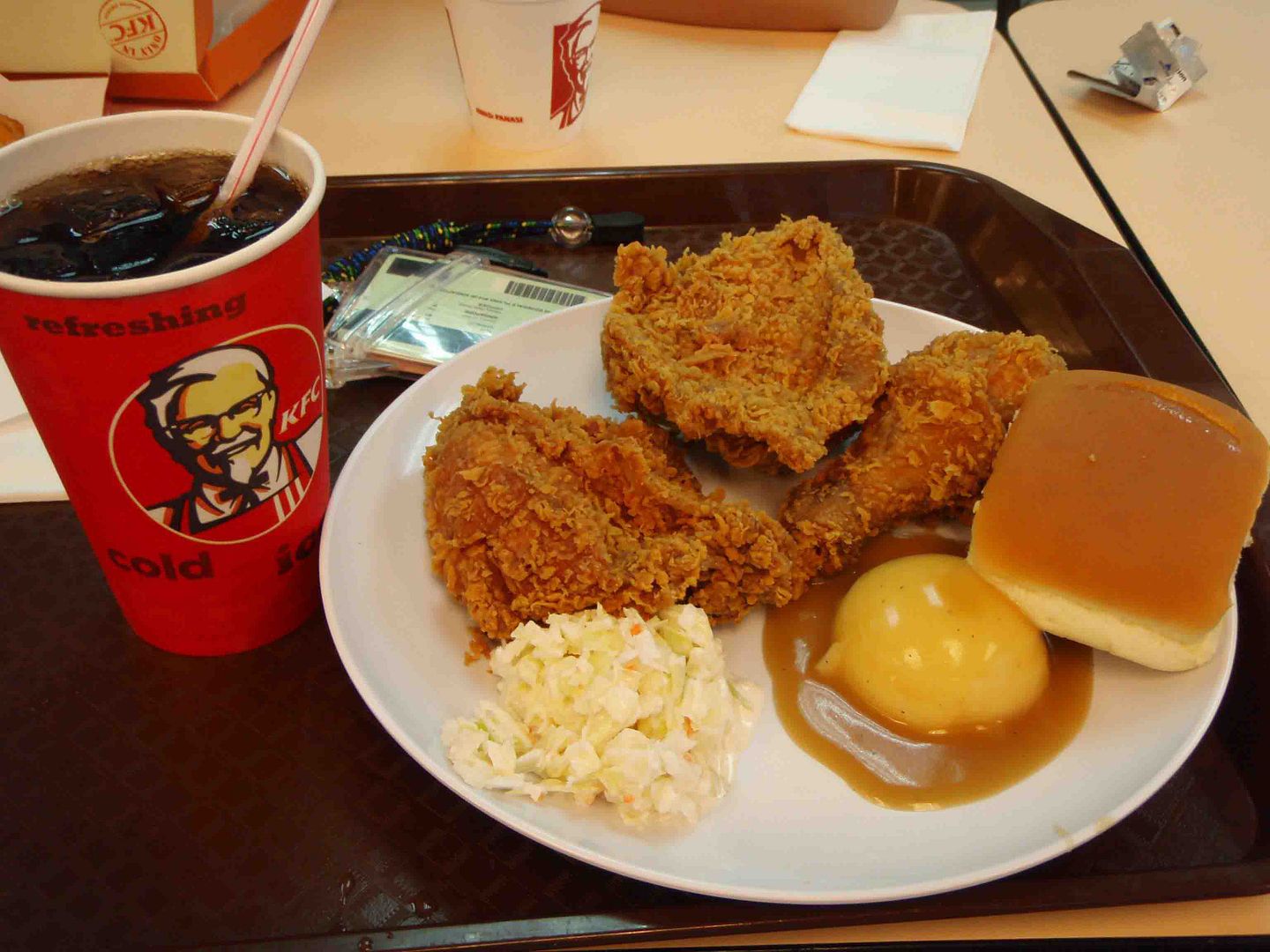
     In strategic management, for fast food industry, suppliers play a key role in the value chain of the fast food industry. Chain restaurants rely on suppliers for food items, packaging, napkins, as well as items like plates and spoons. The same suppliers may be serving competing chains in an industry. This means that the power of these suppliers needs to be assessed by any company looking to enter the industry. A strong supplier may be able to effect profitability, quality of products and force companies to raise prices. The following factors may raise the bargaining power of suppliers:
  1. If the suppliers have a larger base of customers, then they will be able to exert more control over the buyer. When the bulk of sales in not made up of one company’s business, the supplier can afford to drop a buyer who resists its efforts to exert control.
  2. If there are only a few suppliers in the market then they will manage to have more control. Fast Food chains can simply pick other suppliers in industries where suppliers are manifold. In this case the supplier will have to meet the buyer’s demands or sell a highly differentiated product.
  3. Suppliers with strong brand names of their own will be able to exert more control. Generic products on the other hand will have significantly less bargaining room. For example, condiment makers who supply to chain stores may be able to leverage consumer preferences for their product over a generic one of the same type. Also, beverage choices such as a preference for Coca Cola over Pepsi may drive people from one chain to the other.
     Any fast food chain needs to consider what power suppliers in its regional market exert before making the decision to move into that market or expand operations.

Storm : Think Like A Fish

     I just bought a fishing rod that is Gomoku Erito, produced by Storm, Rapala VMC Corporation. It is very attractive rod with colourful colurs and most important thing that is suitable for anglers like me and surely for jiggers. Now this type of rods very famous and sold like 'goreng pisang panas' entire of Malaysia even other countries. 
     New from STORM, the Gomoku series of rods is specifically aimed at the rapidly emerging Micro-Jigging market. These rods are extremely lightweight and come fitted with some of the best components available. Standing out from the crowd with pearl white blanks these rods also feature custom Fuji reel seats in red, blue or green to distinguish between the different models in the range. They are ideally suited to 2500 and 3000 size reels.The models are available in 3 PE rating Ranges and are capable of jigging micro weights from as low as 10g up to a max weight of 160g.

     Lets me tell more about Storm and the company. For me the company had everything about strategic management. Rapala VMC Corporation continues to grow catch by catch through its strategic cornerstones by it brands, manufacturing and distribution. They strengthen each other and keep on providing opportunities for growth by acquisitions, brand extensions, new product innovations and entering new markets.
Graph Of Rapala VMC Company
     Rapala VMC Corporation has a responsibility to shareholders, employees, business associates and the society as well as all people who use the Rapala Group’s products. They also take responsibility of their actions and their environmental impact wherever they operate. Storm is one of the successful brand that company produced. At Storm, they we´re very serious about fishing. They believe getting into the head of a fish to really understand what's going on like what makes a fish bite. They build lures based on those findings because they know that we are serious about fishing too. Their moto of 'Think like a fish' very successful to attract for those who loved fishing.


Wednesday, 8 July 2015

Distinctive Competencies


      A distinctive competency is a competency unique to a business organization, a competency superior in some aspect than the competencies of other organizations, which enables the production of a unique value proposition in the function of the business.
      Competencies are strengths which cannot be easily matched or imitated by competitors. E.g. McDonald’s has exclusive right (trademark) for it logo. Firms build competitive advantage using the competencies that they have.

      This picture i get from someone in facebook. I'm really surprise that someone used logo look seems as KFC, Burger King and Pizza Hut as his restaurant logo's. It is good to open a business but he or she cannot copying this 3 brand or logo easily. If KFC, Burger King and Pizza Hut take an action againts this restaurant by claiming their sue or court action on exclusive right (trademark) for it logo's, maybe this restaurant could be closed immediately and their owner can be fined in numbered.


Vision VS Mission???

     I believed not only me but everyone had a lot of confusion regarding the difference between a Vision and Mission statement. I regularly see Vision statements that are actually Mission statements and vice versa -- from Fortune 500's, nonprofits, and government agencies. I also see well intended Vision and Mission statements that are uninspiring, confusing, and so long that they are impossible for anyone to remember.

     Why does it matter if there is confusion about Vision and Mission statements, or if they are written in a certain way. For the same reasons it is fundamental and valuable for any organization to have a strategic plan as a roadmap for success, it is important to develop a plan around a clearly defined and well written Vision and Mission. Both serve important, yet different roles as core elements of a strategic plan.


What Is Strategic Management?


     Strategic Management can be defined as the art and science of formulating, implementing and evaluating cross-functional decisions that enable an organization to achieve its objectives. As this definition implies, strategic management focuses on integrating management, marketing, finance/accounting, production/operations, research and development and information systems to achieve organizational success.

     I think Strategic Management can be illustrated or explain as this story when there were two company presidents who competed in the same industry. These two presidents decided to go on a camping trip to discuss a possible merger. They hiked deep into the woods. Suddenly, they came upon a grizzly bear that rose up on its hind legs and snarled. Instantly, the first president took of his knapsack and got out a pair of jogging shoes. The second president said, "Hey, you can't outrun that bear." The first president responded, "Maybe i can't outrun that bear, but i surely can outrun you!"
So from this story captures the notion of strategic management, which is to achieve and maintain competitive advantage in this real world of businesses.